
Thyroid solutions in Kitsap County
/Fix your thyroid naturally not with drugs
Fix your thyroid naturally not with drugs
Check out the testimonials How Acupuncture works
Looking for acupuncture in Poulsbo, WA? Dr. Hans-Thomas Richter, PhD, EAMP, Dipl. OM, provides science-informed acupuncture and East Asian medicine at NatureWorks Acupuncture, serving Poulsbo and the greater Kitsap County area.
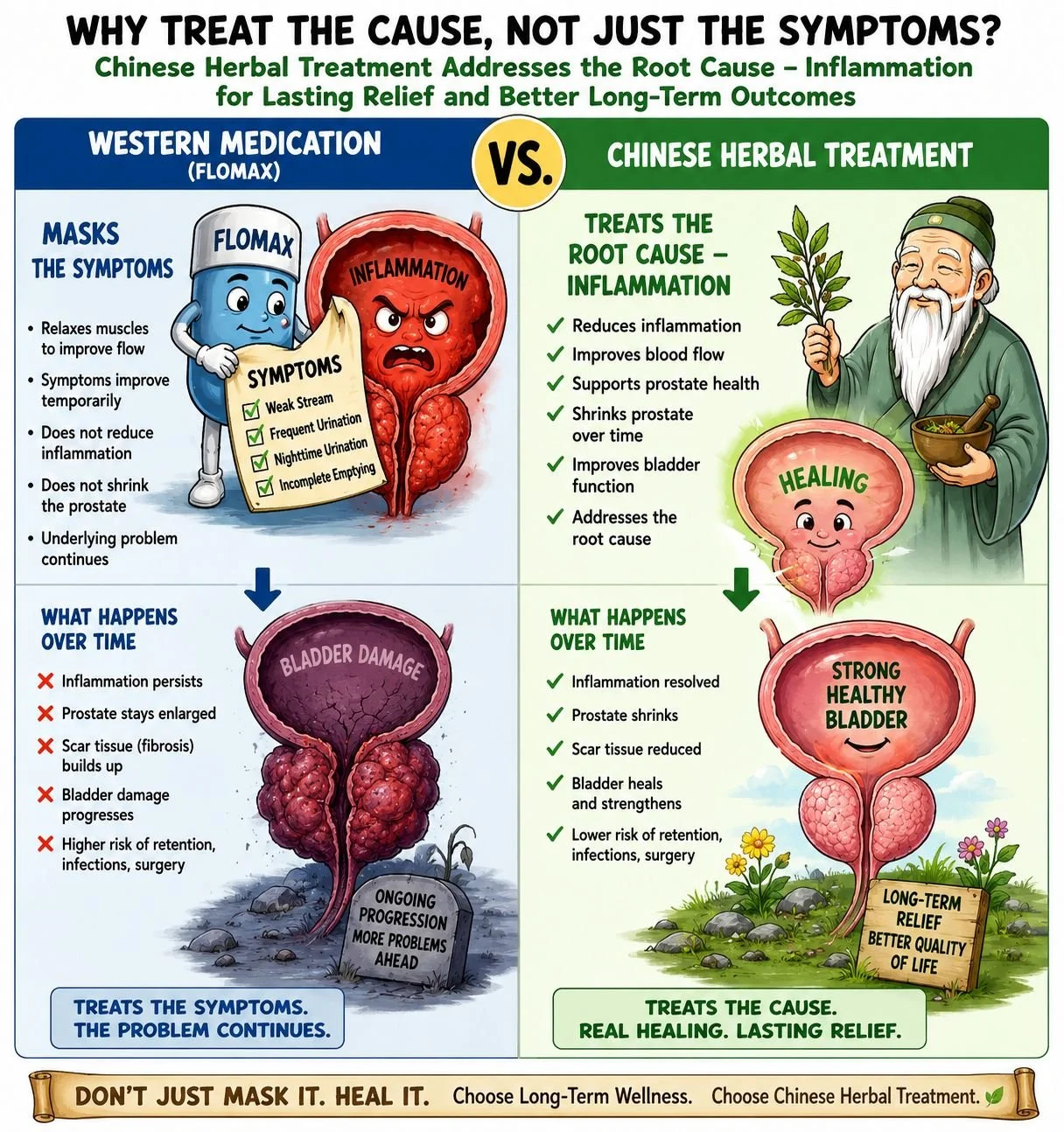
tamsulosin (Flomax) treats symptoms rather than the underlying enlargement, but the part about it causing "massive scar tissue" is not supported by evidence.
Here's the distinction:
Tamsulosin is an α1-adrenergic blocker. It relaxes the smooth muscle in the prostate and bladder neck, reducing resistance to urine flow. It does not shrink the prostate or reduce BPH tissue growth.
Finasteride works differently. It lowers dihydrotestosterone (DHT), and over 6–12 months it can reduce prostate volume by about 20–30% and lower the risk of urinary retention and surgery.
Yes. Chronic bladder outlet obstruction can lead to:
Bladder wall thickening and remodeling.
Reduced bladder compliance.
Trabeculation and diverticula.
In some men, deterioration of bladder muscle function.
In severe cases, hydronephrosis and kidney impairment.
These changes involve fibrosis (scar-like remodeling) in the bladder, and there may also be fibrotic changes within the prostate over time. However, there is no good evidence that tamsulosin itself causes or promotes scar tissue. If anything, by lowering outlet resistance, it may reduce some of the mechanical stress on the bladder.
Your concern is valid in another sense: if a patient has significant mechanical obstruction, relaxing the smooth muscle may not be enough. A man with a 96 mL prostate can still progress despite feeling temporarily better on tamsulosin. That's why patients who continue to have retention, recurrent infections, bladder stones, kidney effects, or persistent severe symptoms are often evaluated for definitive treatment rather than simply continuing medication.
dont travel with pain - see Natureworks first!
Do you know the source of your pain?
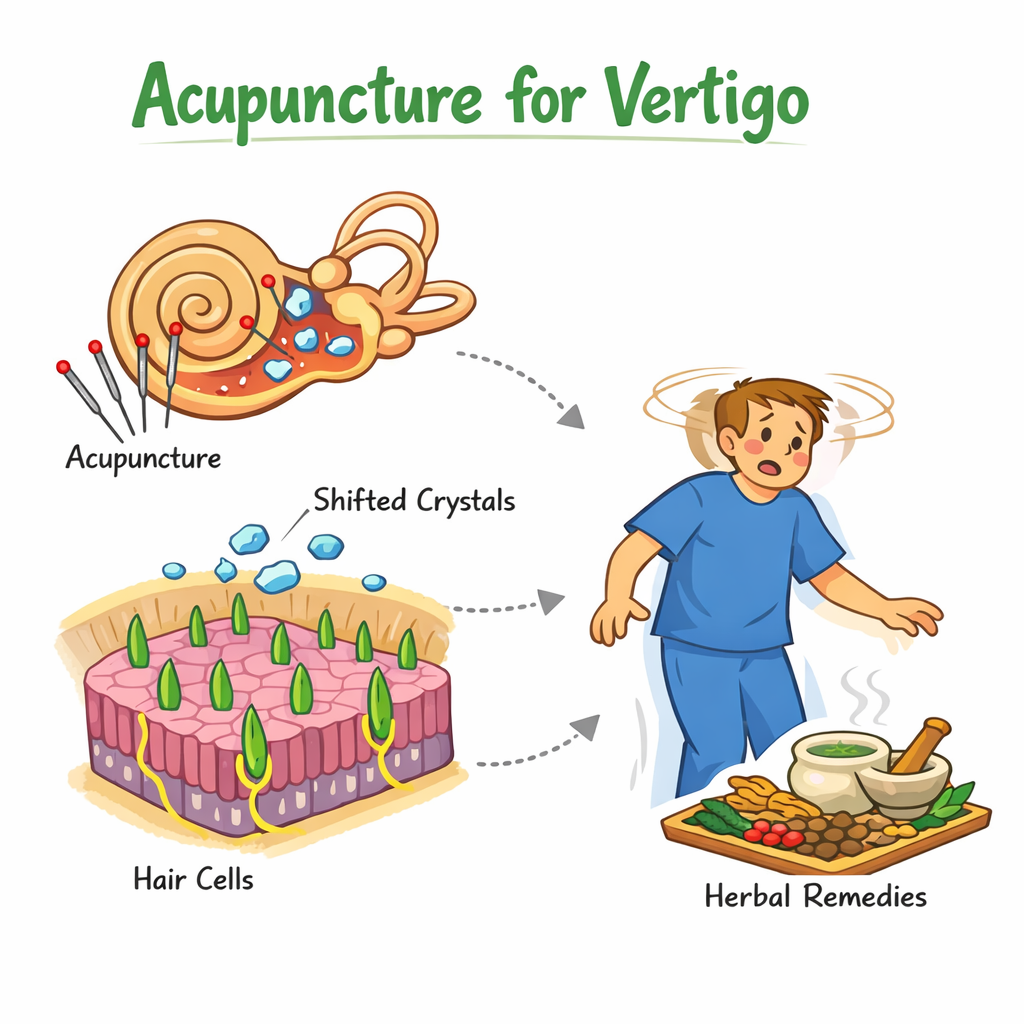
Functional MRI studies show acupuncture influences brainstem nuclei and cerebellar circuits responsible for balance. By stimulating specific points, acupuncture helps normalize the integration of vestibular signals with visual and proprioceptive inputs.
This “neural recalibration” is why patients often report:
Reduced spinning episodes
Improved steadiness while walking
Less motion-triggered dizziness
The inner ear is extremely sensitive to microvascular perfusion. Even small reductions in blood flow can impair hair cell function and vestibular signaling.
Acupuncture enhances regional circulation by:
Increasing nitric oxide release
Modulating autonomic vascular tone
Reducing inflammatory cytokines
This is particularly relevant in patients with:
Post-viral vestibular neuritis
Ménière’s-type symptoms
Age-related microvascular insufficiency
Acupuncture provides rapid neuromodulation:
Calms vestibular hyperexcitability
Improves cerebral and inner ear microcirculation
Reduces cervical muscle tension and proprioceptive mismatch
Regulates autonomic tone (important for stress-triggered dizziness)
Herbal medicine works more gradually but deeply:
Resolves phlegm and dampness that “cloud” the head
Anchors excessive upward Liver Yang activity
Nourishes Blood and Kidney essence supporting brain stability
Reduces inflammatory and microvascular contributors to dizziness
Together, they create both immediate relief and long-term stabilization.
treat migraines with acupuncture not drugs
Don’t rush into surgery…
watch our podcast, this was fun

In the ever-evolving field of acupuncture and Oriental medicine, maintaining a high standard of care and expertise is paramount. This year, we are thrilled to celebrate Dr. Hans-Thomas Richter, who has achieved a remarkable milestone: over 10 years of National Certification Commission for Acupuncture and Oriental Medicine (NCCAOM) Board certification. This accomplishment not only highlights Dr. Richter's dedication to his craft but also underscores his commitment to providing the highest level of care to his patients.
Dr. Richter’s journey in acupuncture and Oriental medicine began over a decade ago with a profound interest in holistic health and wellness. His path has been marked by continuous learning, rigorous training, and a passion for integrating traditional practices with modern medical insights. Achieving and maintaining NCCAOM Board certification for over 10 years is a testament to his unwavering dedication to excellence in his field.
The NCCAOM certification is a prestigious credential in the field of acupuncture and Oriental medicine. It ensures that practitioners meet rigorous standards of knowledge and skill, demonstrating their competence and professionalism. Board certification is not a one-time achievement but requires ongoing education and re-certification, reflecting a commitment to staying current with advancements and maintaining the highest standards of practice.
Throughout his career, Dr. Richter has made significant contributions to the field of acupuncture and Oriental medicine. His approach combines traditional techniques with evidence-based practices, providing patients with comprehensive and personalized care. He has been instrumental in advancing the understanding of how these ancient practices can complement modern medicine, offering alternative and integrative solutions for various health conditions.
At the core of Dr. Richter’s practice is a deep commitment to his patients. His holistic approach emphasizes treating the whole person, not just the symptoms. This patient-centered philosophy has earned him the trust and respect of his patients, who appreciate his thorough and compassionate care. Over the years, Dr. Richter has helped countless individuals achieve better health and well-being through his expertise in acupuncture and Oriental medicine.
As we celebrate this significant milestone, we look forward to many more years of Dr. Richter's contributions to the field. His dedication to continuous learning and improvement ensures that his patients will continue to receive the highest quality care. Dr. Richter’s 10+ years of NCCAOM Board certification is not just a personal achievement but a milestone for the entire community of acupuncture and Oriental medicine practitioners.
Join us in congratulating Dr. Hans-Thomas Richter on this remarkable achievement. His dedication to excellence and patient-centered care sets a standard for all practitioners in the field, inspiring the next generation of acupuncturists and Oriental medicine professionals.
Confused where your pain is coming from ? We can help!

It’s like putting little tiny jumper cables on all your cells and promoting a good electric field for each individual cell. While the Acupuncture works on the Vegas nerve the combination of the 2 treatments is more powerful!

PEMF therapy is a non-invasive treatment that applies intermittent, current pulse-generated magnetic field pulses over a short time! It was shown to increase microcirculation and improves cell healing and oxygenation. Get a jump start on your stem cells!

This treatment is available at Natureworks or you can apply here: https://clinicaltrials.gov/ct2/show/NCT05909709

Tennis elbow and wrist problems are difficult to treat: The treatment for these conditions can be challenging for several reasons:
Persistence of symptoms: The pain and discomfort associated with these conditions can persist for several weeks or even months, and full recovery may take a significant amount of time.
Difficulty in avoiding the causative activity: Often, the activity causing the problem is something the person needs to continue doing, like their job or a hobby they love. Modifying these activities can be tough.
Non-specific symptoms: Both conditions may present with a range of symptoms that are not specific to them alone, making diagnosis and treatment more complicated.
Risk of recurrence: Even after successful treatment, if the individual returns to the activity that caused the problem and does not change the way they perform that activity, the issue may recur.
We have solutions waiting for you!

If you're trying to cut down on late-night snacking for weight loss and intermitted fasting or eating, here are a few tips that might help:
Create a Routine: Try to establish regular meal times throughout the day. This can help regulate your body's hunger cues and reduce cravings later in the night.
Stay Hydrated: Sometimes our bodies mistake thirst for hunger. Make sure you're drinking enough water throughout the day and into the evening.
Choose Protein-Rich Snacks: If you need a late-night snack, opt for something high in protein. Protein can help you feel full longer and can help stabilize your blood sugar levels.
Mindful Eating: Take time to sit down and enjoy your meals without distractions. This can help you feel more satisfied and reduce the desire to snack later on.
Healthy Sleep Habits: Establish a regular sleep schedule and create a calming bedtime routine. If you're well-rested, you may be less likely to snack late at night.
Distraction: If you find that you're eating out of boredom, try to distract yourself with other activities. This could be reading, doing puzzles, or any other activity that you enjoy.
Don’t Skip Meals: Make sure you're eating balanced meals throughout the day. Skipping meals can lead to overeating later in the evening.
Understand Your Hunger: It's important to differentiate between emotional hunger and physical hunger. If you find that you're eating in response to stress, sadness, or other emotions, there are other ways to cope with these feelings, such as talking to a friend or going for a walk.
https://www.fda.gov/safety/recalls-market-withdrawals-safety-alerts/frito-lay-issues-allergy-alert-undeclared-milk-lays-classic-potato-chips-distributed-connecticut#:~:text=PLANO%2C%20Texas%20%E2%80%93%20May%204%2C,investigation%20following%20a%20consumer%20complaint.
Supplement and Nutrition Science - Omega3 Science Explained (omega3health.us)
After the intervention, sucralose was detected in 3 individuals randomly assigned to receive carbonated water (26-121 ng/mL; mean ± SD: 60.7 ± 52.4 ng/mL).Conclusions: Despite the selection of healthy volunteers with minimal reported LCS consumption, more than one-third were exposed to sucralose at baseline and/or before randomization
NOW Offering FREE QI GONG classes twice a week. Currently Sat 1pm pm. Please Email because space is limited.
Acupuncture and East Asian medicine in Poulsbo, WA with a science-informed approach. Dr. Hans-Thomas Richter, PhD, helps patients across Kitsap County with pain, digestion, inflammation, stress, and recovery support.
Back & neck pain
Knee, hip & shoulder pain
Arthritis
Sports injuries
Neuropathy
Headache & migraine
Women's health
Digestive disorders
Chronic/inflammatory conditions
NOW Offering Qi Gong Classes! Saturday 1:30
Serving Kitsap & Jefferson counties, including Poulsbo, Bremerton, Silverdale, Bainbridge Island, Kingston, Port Orchard, Hansville, Keyport, Bangor, Port Gamble, Port Ludlow, Port Townsend, Chimacum, Gig Harbor, Belfair, Seattle, Tacoma, Olympia, natureworksacupuncture@gmail.com | 206-595-3388• All material ©2013 NatureWorksAcupuncture, 17791 Fjord Dr. NE Suite 214A, Poulsbo, WA 98370

