Acupuncture for Vertigo in Kitsap County: A Functional and Neurological Approach to Restoring Balance
/How Acupuncture Works in Vertigo
1. Modulating Vestibular Nuclei and Brainstem Integration
Functional MRI studies show acupuncture influences brainstem nuclei and cerebellar circuits responsible for balance. By stimulating specific points, acupuncture helps normalize the integration of vestibular signals with visual and proprioceptive inputs.
This “neural recalibration” is why patients often report:
Reduced spinning episodes
Improved steadiness while walking
Less motion-triggered dizziness
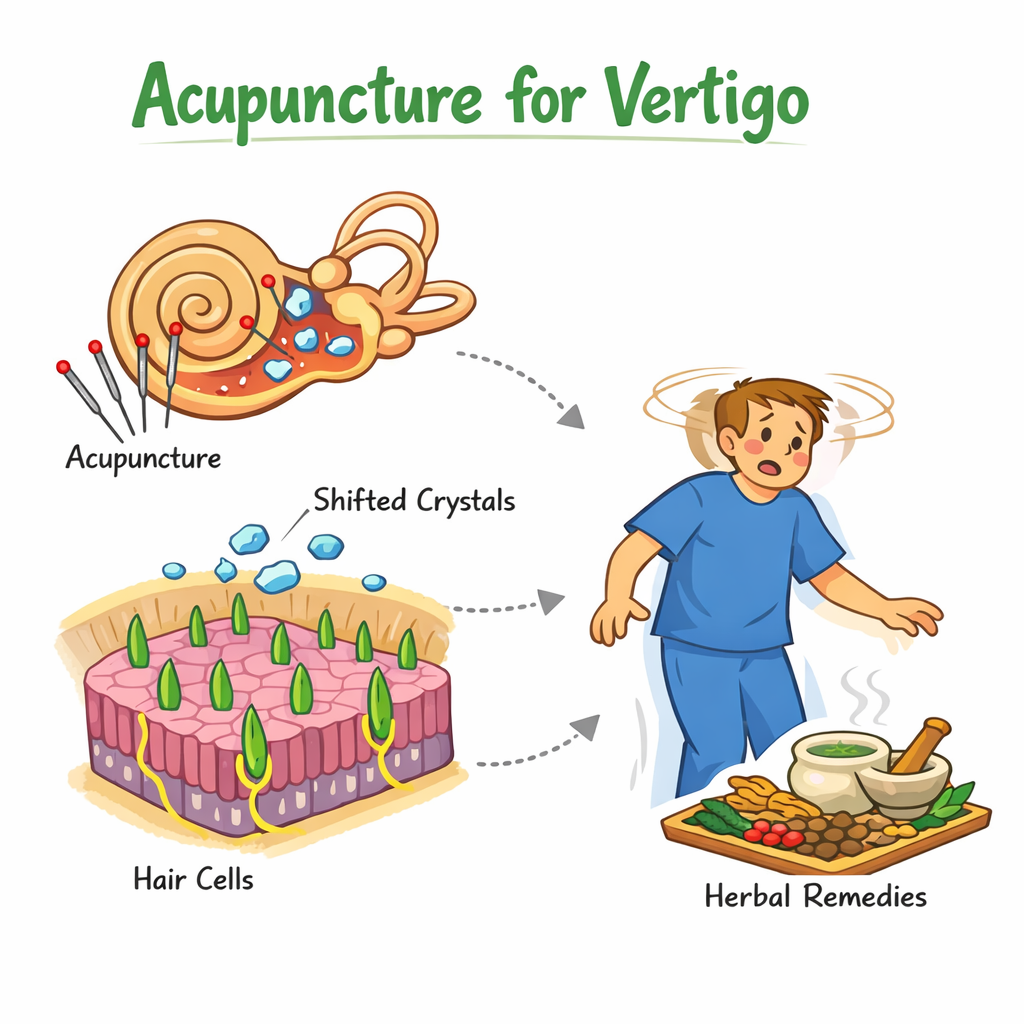
2. Improving Microcirculation to the Inner Ear
The inner ear is extremely sensitive to microvascular perfusion. Even small reductions in blood flow can impair hair cell function and vestibular signaling.
Acupuncture enhances regional circulation by:
Increasing nitric oxide release
Modulating autonomic vascular tone
Reducing inflammatory cytokines
This is particularly relevant in patients with:
Post-viral vestibular neuritis
Ménière’s-type symptoms
Age-related microvascular insufficiency
3. Why Combine Acupuncture with Herbs?
Acupuncture provides rapid neuromodulation:
Calms vestibular hyperexcitability
Improves cerebral and inner ear microcirculation
Reduces cervical muscle tension and proprioceptive mismatch
Regulates autonomic tone (important for stress-triggered dizziness)
Herbal medicine works more gradually but deeply:
Resolves phlegm and dampness that “cloud” the head
Anchors excessive upward Liver Yang activity
Nourishes Blood and Kidney essence supporting brain stability
Reduces inflammatory and microvascular contributors to dizziness
Together, they create both immediate relief and long-term stabilization.