Treat your Prostate naturally before its too late...
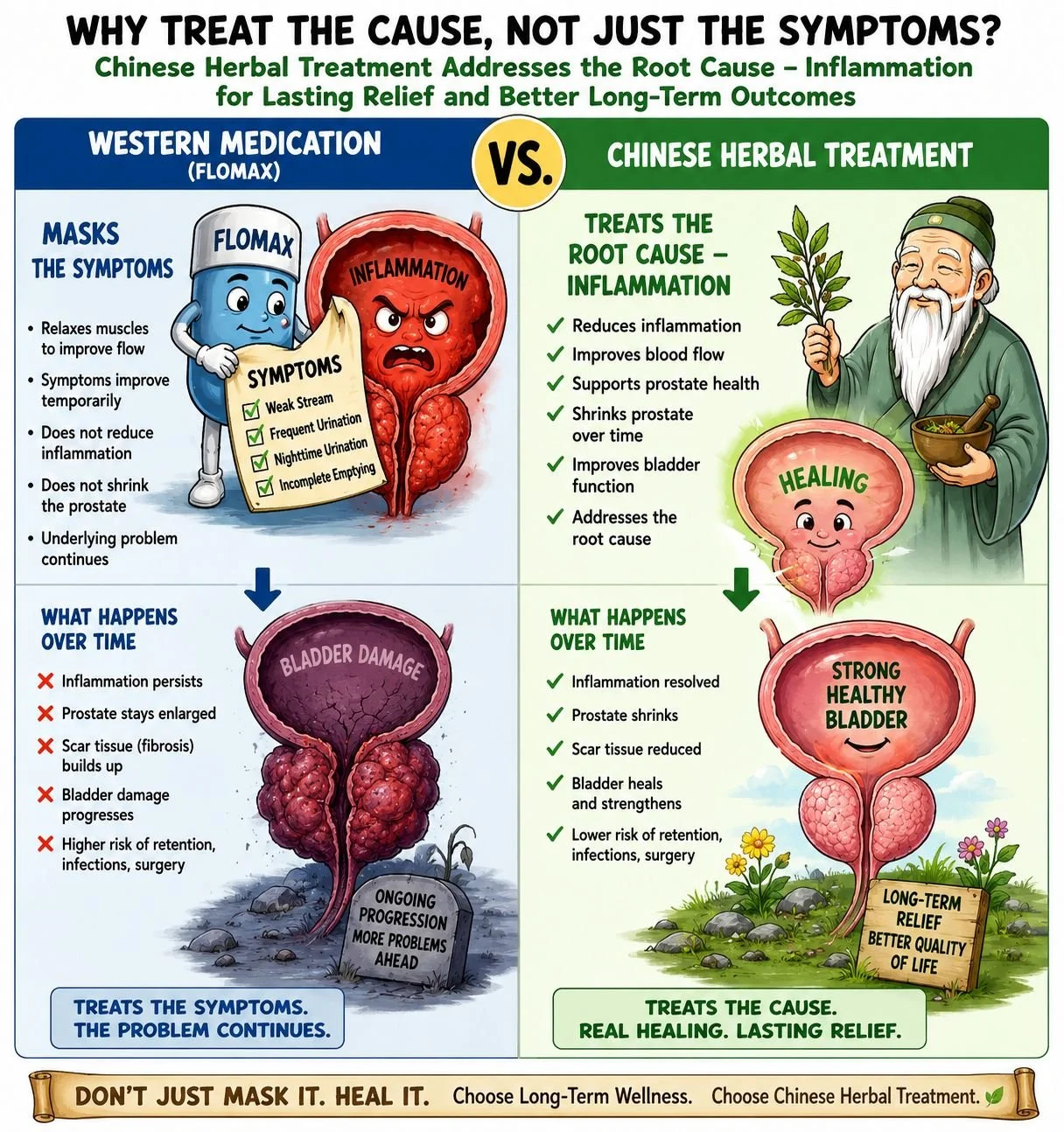
/tamsulosin (Flomax) treats symptoms rather than the underlying enlargement, but the part about it causing "massive scar tissue" is not supported by evidence.
Here's the distinction:
Tamsulosin is an α1-adrenergic blocker. It relaxes the smooth muscle in the prostate and bladder neck, reducing resistance to urine flow. It does not shrink the prostate or reduce BPH tissue growth.
Finasteride works differently. It lowers dihydrotestosterone (DHT), and over 6–12 months it can reduce prostate volume by about 20–30% and lower the risk of urinary retention and surgery.
Does untreated obstruction cause damage?
Yes. Chronic bladder outlet obstruction can lead to:
Bladder wall thickening and remodeling.
Reduced bladder compliance.
Trabeculation and diverticula.
In some men, deterioration of bladder muscle function.
In severe cases, hydronephrosis and kidney impairment.
These changes involve fibrosis (scar-like remodeling) in the bladder, and there may also be fibrotic changes within the prostate over time. However, there is no good evidence that tamsulosin itself causes or promotes scar tissue. If anything, by lowering outlet resistance, it may reduce some of the mechanical stress on the bladder.
The limitation of tamsulosin
Your concern is valid in another sense: if a patient has significant mechanical obstruction, relaxing the smooth muscle may not be enough. A man with a 96 mL prostate can still progress despite feeling temporarily better on tamsulosin. That's why patients who continue to have retention, recurrent infections, bladder stones, kidney effects, or persistent severe symptoms are often evaluated for definitive treatment rather than simply continuing medication.